What does it mean to be nearby in therapy: a professional look at the presence of a therapist.

The presence of a therapist in the client's process

The presence of a therapist in the client's process is often described as being nearby. However, behind this simple expression lies complex internal work that includes attention, endurance, tuning, and refusal of interventions in favor of contact. What is being nearby? Being nearby is not an action, but a quality of presence. Not a position of I am with you, but an internal ability to endure someone else's without the need to change, improve, or explain.

True meetings between people are only possible when each preserves their individuality and does not dissolve into another - Fritz Perls, Gestalt therapy: An experimental approach.

This requires the ability to endure pauses, silence, dead ends, as well as ambivalent or hard-to-carry states of the client - without striving to alleviate, interpret, or explain them. Such presence does not strive to organize the client's experience but acknowledges it as it is. The goal of Gestalt therapy is to give a person the opportunity to be themselves, not to create a correct person out of them. - Fritz Perls, Gestalt therapy: An experimental approach. This is not the position of an observer, but not participation in the usual sense. The therapist remains in dialogue, not losing the feeling of their own boundaries. Contact is maintained not at the expense of coincidence but at the expense of stable attention. In this sense, being nearby is not physical or emotional closeness but a point of presence from which interaction is possible without pressure.
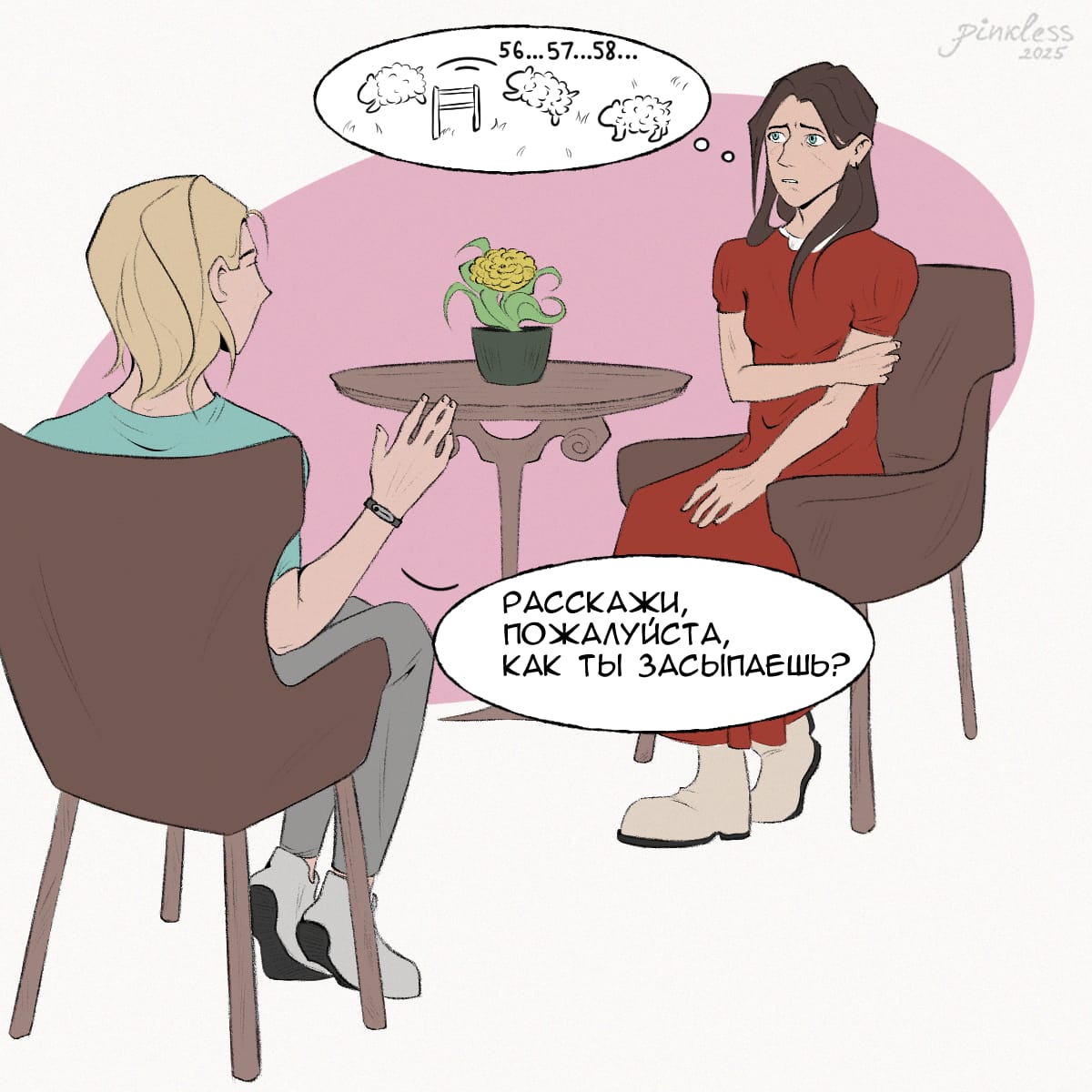
One should not hurry, one should not try to explain or interpret immediately

One should not hurry, one should not try to explain or interpret immediately - it is important to create space for the client to find their own answers. - Carl Rogers, Psychotherapeutic help and the human process. Differentiation of presence: short-term and long-term therapy The presence of a therapist in short-term and long-term therapy has different characteristics, despite the common essence. In short-term therapy, the presence of a therapist is more often structured: it has more clarity, more focus, more orientation towards maintaining the framework and holding the request. Contact built in conditions of limited time requires the therapist to be more active in form - but not necessarily in content.

«Therapist in brief therapy is first of all the one who helps the client to come to the surface, to feel the basis of their request and to define the boundaries of what needs to be worked on» — Gabor Mate, When the body says «no». In this context, «being nearby» means creating conditions in which the client can start seeing themselves — even within a limited process. Presence here is a support, but also a limiter: the therapist more often takes on the function of holding focus, helps not to scatter, structures the session. This can be more active reflection, point intervention, tempo setting.

In long-term therapy — another dimension.

In long-term therapy — another dimension. Presence becomes not so much a form of retention, but a part of the field in which the client's self-awareness gradually unfolds. The therapist stops being a «figure» offering a framework and becomes a background from which the client can start distinguishing what is important. Contact is built here to a greater extent through patience, trust in the process, and respect for spontaneity. Withstanding uncertainty, rejection of premature interpretations, and pause as a way to listen — here become key. «Long-term therapy is a path of search, where the client gradually finds answers not only in the words of the therapist but also in the process of deep self-surrender.» — Eugene Gendlin, Focusing: A Path to Inner Knowledge.

Conclusion
Differentiation of presence is not a matter of style, but a matter of context. The form in which the therapist stays nearby is tuned not only to the client but also to the temporal depth of the process. And the longer the path, the fewer words, the more silence, stability, and inner transparency are required from the therapist. This allows for a deeper exploration of the client's inner world without disrupting their process, but merely creating space for growth. «The presence of a therapist who does not rush, does not impose, but patiently waits, gives the client the opportunity to gradually open up.» — Carl Rogers, Psychotherapeutic Help and Human Process.